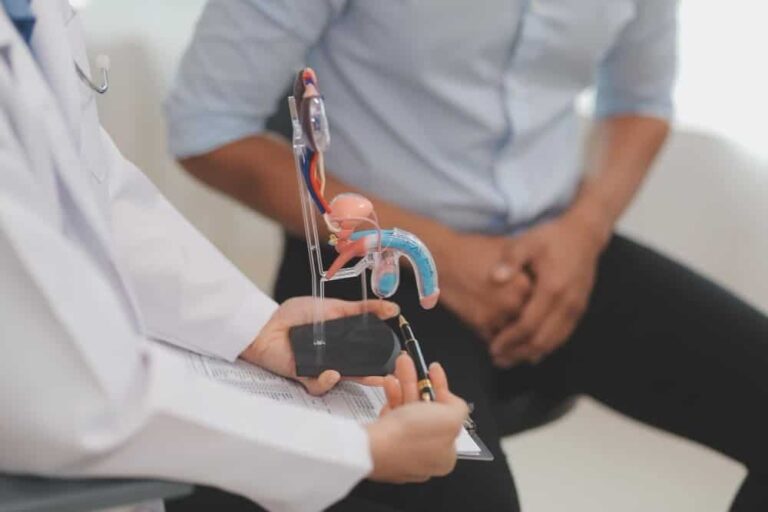
Exhausted from sleepless nights due to constant urinary urges? Enlarged prostate symptoms can disrupt your sleep and quality of life. If you fear traditional surgery, you might be looking for details regarding how is prostate artery embolization performed. This minimally invasive option offers effective relief without the risks of major operations.
An Overview of How Is Prostate Artery Embolization Performed?
When facing a diagnosis of benign prostatic hyperplasia (BPH)—the medical term for a noncancerous enlargement of the prostate gland—many men fear the knife. They worry about incontinence, sexual dysfunction, and long hospital stays. This is where Prostate Artery Embolization (PAE) changes the narrative.
But what exactly happens during this procedure? Unlike traditional surgery like TURP (Transurethral Resection of the Prostate), PAE does not involve scraping or removing tissue through the urethra. Instead, it is a minimally invasive treatment that works from the inside out. The core concept is simple yet brilliant: by restricting the blood flow to the enlarged gland, we can force it to shrink.
This technique is performed by an interventional radiologist—a doctor specializing in using advanced imaging to guide tiny instruments through the body’s vessels. It offers a safe and effective alternative for patients seeking relief from urinary symptoms without the trauma of open surgery.
Mapping the Anatomy: Preparation and Advanced Imaging
Before a single instrument is touched, the success of the procedure relies on precision planning. Dr. Samir Abdel Ghaffar begins with a comprehensive evaluation to ensure safety.
Because the arteries in the pelvis are complex and vary from person to person, a detailed map is required. Patients typically undergo a CT angiography or MRI. These scans allow the doctor to visualize the specific vessels supplying the prostate.
Dr. Samir distinguishes his practice by also utilizing echocardiography. This creates a holistic safety profile, ensuring your heart function can support the mild sedation used during the procedure. This thorough approach confirms you are a viable candidate and helps the team anticipate the unique path of your vessels.
The Entry Point: Local Anesthesia and Access
One of the most comforting aspects of this option is that it is an outpatient procedure. You don’t need general anesthesia. You remain awake but relaxed.
To begin, Dr. Samir applies a local anesthetic to numb the skin. The entry point is incredibly small—just a pinhole puncture.
- The Groin Approach: Historically, the femoral artery in the groin was the standard entry point.
- The Wrist Approach: Increasingly, advanced techniques allow for access via the wrist (radial artery), which can make recovery even shorter and more comfortable.
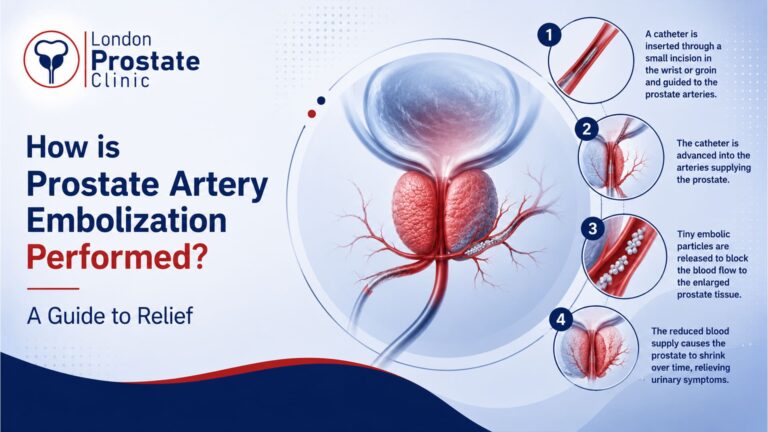
Through this tiny incision, a slender tube called a catheter is inserted. This eliminates the need for large cuts or stitches, significantly reducing the recovery time.
The Journey Inside: A Step-by-Step Look at Navigation
Once the catheter is inside the artery, the interventional radiologist takes over as a navigator. Using high-tech X-ray guided imaging (fluoroscopy), Dr. Samir threads the catheter through the body’s arterial highway.
This requires immense skill. The doctor must steer this tiny tube deep into the pelvis to find the specific prostatic arteries. These vessels can be as thin as a thread. The goal is to get the catheter positioned exactly at the ostium (opening) of the artery that feeds the prostate, without entering vessels that supply the bladder or rectum.
This precision is why choosing an expert like Dr. Samir Abdel Ghaffar is crucial. His expertise ensures that the treatment is focused solely on the gland, minimizing risks to surrounding tissues.
Deployment: Blocking the Supply with Microscopic Particles
This is the defining moment of the PAE procedure. Once the catheter is perfectly placed, the embolization begins.
Dr. Samir injects a fluid containing embolic agents. These are microscopic plastic particles (microspheres), roughly the size of grains of sand. These particles flow with the blood into the prostate’s internal vessels.
Because they are calibrated to a specific size, they lodge securely in the vessels, creating a block. This process significantly decreases the blood supply to the prostate. The doctor repeats this step for both the left and right sides of the gland to ensure uniform results.
Deprived of oxygen and nutrients, the enlarged tissue begins to soften and die off (necrosis), which eventually shrinks the overall volume of the prostate.
Immediate Post-Procedure: No Catheter Required?
Once the particles are delivered and the blood flow is verified to be blocked, the catheter is gently removed. Because the entry site was just a puncture, no stitches are needed—usually, just a firm press and a small bandage suffice.
A major advantage of BPH Prostate artery embolization over surgical methods is the lack of urinary catheters.
- Surgical Expectation: After TURP, men often wake up with a painful catheter inserted through the penis to drain urine for days.
- PAE Expectation: Most PAE patients go home the same day without a catheter. If one is needed due to extreme prior retention, it is removed much sooner than in surgical cases.
You will spend a few hours in a recovery bay where the team monitors your vitals, ensuring the sedation wears off and you are stable before discharge.
Recovery and Results: What to Expect
Recovery is generally rapid. You may experience “post-PAE syndrome” for a few days, which can feel like a mild flu or pelvic ache. This is a good sign—it means the prostate tissue is reacting to the treatment. Simple medications are usually enough to treat this discomfort.
How does it improve life?
Over the next few weeks and months, the prostate shrinks. As the bulk of the tissue decreases, the pressure on the urethra lifts.
- Urination becomes stronger.
- The frequency of bathroom trips drops.
- Nighttime disruptions fade.
The success rate is high, with studies showing that the majority of men report sustained symptom relief for years.
What are the benefits of prostatic artery embolization?
The advantages of PAE are compelling for the modern patient. It is a technique that respects the male anatomy.
- Sexual Function: Unlike surgery, PAE has a near-zero risk of causing sexual dysfunction or retrograde ejaculation.
- Safety: There is minimal blood loss, making it safe for men taking blood thinners or those who cannot undergo major surgery.
- Speed: It is a true “lunchtime” procedure regarding the hospital stay, though you should rest for a few days at home.
For men suffering from benign prostatic hyperplasia, Dr. Samir Abdel Ghaffar offers a path to relief that is highly effective and minimally disruptive.
Frequently Asked Questions
How is a prostate artery embolization done?
It is done by inserting a small catheter into an artery in the wrist or groin. An interventional radiologist guides this tube to the prostate arteries using X-ray imaging and injects tiny particles to block blood flow, causing the gland to shrink.
Do you need a catheter after prostate artery embolization?
Generally, no. One of the main benefits is that most patients do not require a urinary catheter after the procedure. If one is needed due to extreme prior retention, it is usually for a much shorter duration than with surgery.
What are the disadvantages of prostate artery embolization?
Some patients may experience “post-PAE syndrome,” which includes temporary nausea, low-grade fever, or pelvic discomfort for a few days. In rare cases, the particles could affect non-target areas, though expert guidance minimizes this risk.
How long does a prostate artery embolization take?
The procedure typically takes between 1.5 to 3 hours, depending on the complexity of the patient’s vascular anatomy.
How painful is prostate artery embolization?
It is not considered a painful procedure. Local anesthesia numbs the puncture site. Afterward, patients might feel some pelvic cramping, but this is easily managed with oral medications.
Which is better? TURP or PAE?
It depends on the patient’s priorities. TURP is the surgical gold standard but is invasive and carries sexual side effects. PAE is minimally invasive, has a faster recovery, and preserves sexual function. For men seeking a less aggressive approach, PAE is often the preferred choice.
Is prostate embolization a major surgery?
No, it is not surgery at all. It is a minimally invasive interventional procedure performed through a pinhole puncture.
What is recovery like after prostate artery embolization?
Recovery is rapid. Most men return to light activities within a day or two and full normal activities within a week.
What is the aftercare for embolization?
Aftercare involves rest, staying hydrated, and taking prescribed anti-inflammatory meds or antibiotics for a few days. You will have a follow-up to monitor symptom improvement.
How long does artery embolization take?
As mentioned, the technical part of the procedure takes about 1.5 to 3 hours.
Is embolization a major surgery?
No. It avoids general anesthesia, large incisions, and hospital stays, distinguishing it from major surgery.
What is the success rate of prostate artery embolization (PAE)?
Studies show a high success rate, with 80-90% of men experiencing significant symptom relief.
Experience Expert Care with Dr. Samir Abdel Ghaffar
When considering a procedure that affects your quality of life, expertise matters. Dr. Samir Abdel Ghaffar is a distinguished consultant in interventional radiology. He specializes in treating prostate enlargement using state-of-the-art interventional radiology catheterization. His holistic approach also incorporates diagnostic tools like echocardiography to assess overall health readiness, ensuring that every procedure is performed with the highest standards of safety.
Dr. Samir is dedicated to providing reliable medical solutions that help you avoid invasive surgery.
To book a consultation or learn more, you can contact Dr. Samir Abdel Ghaffar at his London, UK clinic:
- Clinic number: +44 20 8144 2266
- WhatsApp number: +44 737779 0644