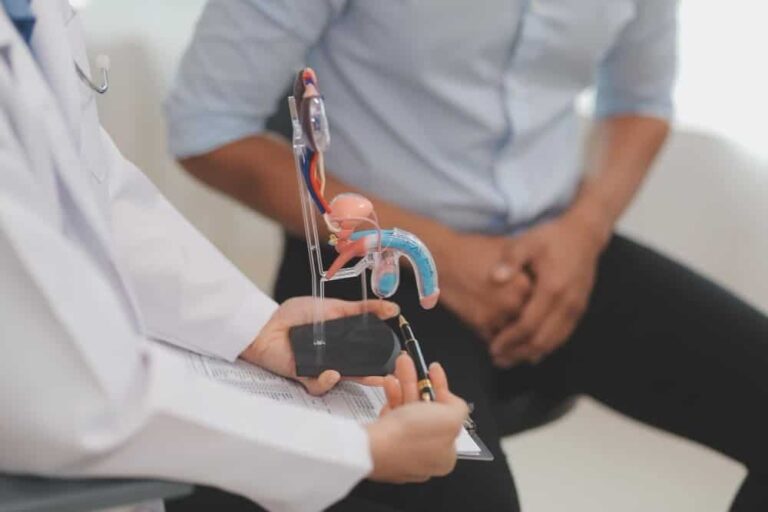
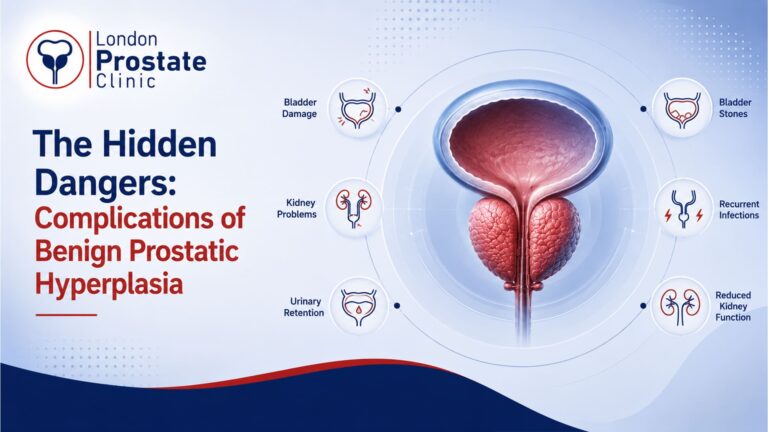
Do you dread going to bed because you know you’ll wake up five times to use the bathroom? It feels frustrating and exhausting, but ignoring these changes can actually damage your health permanently. By understanding the complications of benign prostatic hyperplasia, you can take control before simple symptoms turn into a medical emergency.
Understanding the Complications of Benign Prostatic Hyperplasia
When we talk about an enlarged prostate, many men assume it is just a natural part of aging that they have to live with. However, simply dismissing the symptoms can be dangerous. The complications of benign prostatic hyperplasia (BPH) go far beyond just a weak stream or waking up at night.
If this condition is left untreated, the prostate gland continues to grow. This growth places increased pressure on the urethra—the tube that carries urine from your bladder out of your body. Over time, this obstruction forces the bladder to work harder to push urine out. Eventually, the bladder muscle becomes weak and loses the ability to empty completely.
This incomplete emptying is the root cause of most severe issues. Stagnant urine is a breeding ground for bacteria, leading to infections. Even worse, the back pressure from a full bladder can travel up the ureters and damage the kidneys. We aren’t just talking about discomfort here; we are talking about potential organ failure if the obstruction is severe and prolonged.
Pathophysiology of BPH
To understand the risks, we need to look at what is happening inside. BPH is characterized by the nonmalignant growth of tissue in the prostate. This isn’t cancer; it is a hyperplasia, meaning an increase in the number of cells.
As men age, hormonal changes—specifically involving dihydrotestosterone (DHT)—trigger this growth. The prostate surrounds the urethra like a donut. As the “donut” gets thicker (hypertrophy), the hole in the middle gets tighter.
Initially, the bladder compensates by thickening its muscular wall to push harder. This is the “compensated” phase. But eventually, the bladder wall stretches and thins out, leading to the “decompensated” phase where it becomes a floppy, weak sac that can’t contract effectively. This progression is what leads to the severe Lower Urinary Tract Symptoms (LUTS) and eventual retention issues.
Untreated BPH Complications: A Closer Look
What happens if you just ignore the symptoms? The “wait and see” approach is common, but rarely the best option for severe cases.
Acute Urinary Retention
This is often the most frightening complication. Suddenly, you find you cannot urinate at all, even though your bladder is full and painful. This is a medical emergency requiring immediate catheterization to drain the urine. It is painful and can be triggered by simple things like cold weather, alcohol, or taking certain over-the-counter cold medications.
Chronic Urinary Retention
Unlike the acute form, this happens slowly. You might not feel pain, but your bladder never fully empties. You might be walking around with hundreds of milliliters of urine in your bladder without realizing it. This silent retention is dangerous because it often leads to “overflow incontinence”—leaking urine because the tank is simply overflowing.
Bladder Stones
When urine sits in the bladder for too long, minerals crystallize and clump together. These stones can cause infection, bladder irritation, blood in the urine, and obstruction of urine flow.
Urinary Tract Infections (UTIs)
One of the most frequent complications involves recurrent infections. When the bladder fails to empty completely (incomplete emptying), the residual urine becomes a stagnant pool. Bacteria that enter the urinary tract aren’t flushed out as they normally would be.
These infections can be stubborn. You might take antibiotics, clear the infection, and find it returns a few weeks later because the root cause—the pool of old urine—is still there. If the infection ascends (travels up) the urinary tract, it can reach the kidneys, causing pyelonephritis, a serious condition that can lead to scarring and permanent kidney damage.
Impact on Kidney Health
The most severe long-term risk of untreated BPH is renal failure. The urinary system is a plumbing circuit. If the drain (urethra) is blocked, pressure builds up in the tank (bladder). If the pressure in the tank gets too high, it backs up into the pipes (ureters) and eventually the source (kidneys).
This back-pressure causes the kidneys to swell, a condition called hydronephrosis. Over time, the high pressure damages the delicate filtering units of the kidney. This damage is often irreversible. Regular monitoring of kidney function is crucial for any man with significant BPH symptoms.
Diagnosis of BPH
Prompt detection is key to avoiding these scary scenarios. Diagnosis typically starts with a history of your symptoms—often assessed using the International Prostate Symptom Score (IPSS).
Doctors will perform a Digital Rectal Exam (DRE) to feel the size and shape of the gland. They will also order a PSA (Prostate-Specific Antigen) blood test. While PSA is often associated with cancer screening, it also rises with BPH and infection.
Imaging is vital. An ultrasound can measure the volume of the prostate and, importantly, measure “post-void residual” volume—how much urine is left in the bladder after you pee. This number helps doctors decide if you are at risk for complications like stones or kidney damage.
Risk Factors of BPH
Why do some men develop massive complications while others don’t? Several factors are at play:
- Aging: It is the most significant factor. Rarely found in men under 40, the prevalence increases with every decade of life.
- Family History: If your father or brother had significant BPH issues, your risk increases.
- Diabetes and Heart Disease: Studies suggest a strong link between cardiovascular health and prostate growth.
- Lifestyle: Obesity and lack of physical exercise are correlated with a higher risk of severe symptoms.
BPH Treatment Options
Historically, the path was simple: watch it, take pills, or get surgery. Today, options are much more varied.
Medication Management
For mild to moderate symptoms, doctors often prescribe:
- Alpha-blockers (e.g., Tamsulosin): These relax the muscles in the prostate and bladder neck, making it easier to pee. They work quickly but don’t shrink the prostate.
- 5-alpha-reductase inhibitors: These drugs block the hormonal conversion that causes growth, actually shrinking the gland over time.
- Combination Therapy: Using both often provides the best symptom relief for larger prostates.
However, medications have side effects like dizziness, fatigue, and sexual dysfunction, and they don’t work for everyone.
Complications of BPH Surgery
For years, the gold standard for treatment was Transurethral Resection of the Prostate (TURP). While effective at clearing the obstruction, it is an invasive surgery with its own set of risks.
What are the complications of BPH surgery like TURP?
- Bleeding: The prostate is very vascular, and surgery can lead to significant blood loss.
- Retrograde Ejaculation: A very common side effect where semen enters the bladder instead of exiting the penis during orgasm (dry orgasm).
- Incontinence: Damage to the sphincter can lead to long-term leaking.
- Erectile Dysfunction: A risk that worries many men.
- Strictures: Scar tissue can form in the urethra, narrowing it again and requiring further surgery.
This is where the expertise of Dr. Samir Abdel Ghaffar becomes invaluable. He offers alternatives that avoid these surgical risks.
Safe Alternatives: Interventional Radiology
Dr. Samir Abdel Ghaffar, a Consultant Interventional Radiologist, specializes in minimally invasive techniques that treat BPH without the need for cutting or major anesthesia.
Prostate Artery Embolization (PAE):
This is a revolutionary procedure. Dr. Samir guides a tiny catheter through the blood vessels to the arteries feeding the prostate. He injects microscopic beads that block the blood flow to the gland. Starved of blood, the prostate shrinks naturally.
- No surgery.
- No risk of incontinence.
- Preserves sexual function.
- Quick recovery.
Echolaser Treatment:
This technique uses laser energy delivered through thin needles to heat and destroy the excess prostate tissue. It is precise and effective, offering another layer of safety for patients who want to avoid traditional TURP surgery.
Prostate Hyperplasia vs. Prostate Cancer
A common fear among patients is that their symptoms mean they have cancer. It is vital to clarify: Benign Prostatic Hyperplasia is nonmalignant. It is not cancer, and having BPH does not increase your risk of getting prostate cancer.
However, the symptoms are nearly identical. Both conditions cause urinary frequency, weak flow, and hesitancy. This is why you cannot self-diagnose. You need a medical professional to differentiate the two, usually through PSA testing and potentially an MRI or biopsy if the PSA is elevated.
Complications of Prostate Cancer
While BPH complications are mostly related to obstruction and kidney health, prostate cancer complications can be different. If cancer advances, it can spread (metastasize) to bones and lymph nodes. Treatments for cancer (radical prostatectomy or radiation) also carry much higher risks of severe incontinence and impotence compared to BPH treatments.
Distinguishing between the two early is critical. Dr. Samir ensures that proper imaging and diagnosis are done so that you are treated for the right condition 🩺.
Prevention of BPH
Can you prevent the prostate from growing? To some extent, yes. While you can’t stop aging, you can influence other factors.
- Diet: Eating a diet rich in fruits, vegetables, and healthy fats (like those found in tomatoes and saw palmetto supplements) may help.
- Exercise: Regular physical activity helps regulate hormones and weight, reducing BPH risk.
- Weight Control: Reducing belly fat can lower the hormonal pressure on the prostate.
Why Choose Dr. Samir Abdel Ghaffar?
When facing BPH, many men feel cornered into choosing between medication that kills their libido or surgery that might cause incontinence. Dr. Samir provides a third way.
Using state-of-the-art interventional radiology, Dr. Samir treats the root cause—the enlarged tissue—without the physical trauma of surgery. Whether through Prostatic Artery Embolization or Echolaser, the goal is to restore your quality of life, protect your bladder and kidneys from damage, and get you back to normal quickly.
If you are suffering from a weak stream, frequent night waking, or fear of retention, do not wait for the complications to set in. Early treatment is the best way to preserve bladder function.
Frequently Asked Questions
What are the complications of prostate?
Common complications of an enlarged prostate include acute urinary retention (inability to pee), urinary tract infections, bladder stones, and in severe cases, kidney damage or failure.
Which of the following is the main complication of benign prostatic hyperplasia?
While many complications exist, urinary retention is the most immediate and significant complication that drives patients to seek emergency care. Long-term, bladder muscle damage is a major concern.
What are the complications of BPH surgery?
Traditional surgery like TURP can lead to retrograde ejaculation (dry orgasm), erectile dysfunction, urinary incontinence (leakage), and urethral strictures (scarring).
What complication can arise if BPH is left untreated?
If left untreated, BPH can lead to permanent bladder damage (decompensation) where the bladder can no longer squeeze, recurrent bloody urine, severe infections, and irreversible kidney failure due to hydronephrosis.
Don’t let BPH dictate your life. 🛑
Contact Dr. Samir Abdel Ghaffar today to discuss safe, non-surgical options that preserve your health and lifestyle.
1. Contact the following numbers in London, UK:
- Clinic number: 00442081442266
- WhatsApp number: 00447377790644
2. Contact the following numbers in Egypt:
- Cairo booking number: 00201000881336
- WhatsApp number: 00201000881336